
A surgical incision or pressure wound that isn’t healing properly can turn a manageable recovery into a serious complication fast. Knowing what normal healing looks like — and when it’s time to call in a licensed nurse — can make a real difference.
What Normal Healing Looks Like
A healing wound typically shows gradually decreasing redness and swelling, minimal or clear drainage that lessens over time, and pain that steadily improves rather than worsens. Some mild itching as tissue rebuilds is also normal.
Warning Signs That Need Attention
- Increasing redness spreading outward from the wound
- Warmth or swelling that’s getting worse, not better
- Pus or foul-smelling drainage
- Fever, chills, or feeling generally unwell
- Pain that increases instead of gradually improving
- A wound edge that appears to be separating or opening
Basic Home Wound Care Steps
- Follow discharge instructions exactly — dressing change frequency and technique matter
- Wash hands thoroughly before and after touching the wound area
- Keep the wound dry unless specifically instructed otherwise
- Don’t remove scabs or picking at healing tissue
- Take photos periodically so you can compare changes over time rather than relying on memory
When Professional Wound Care Makes Sense
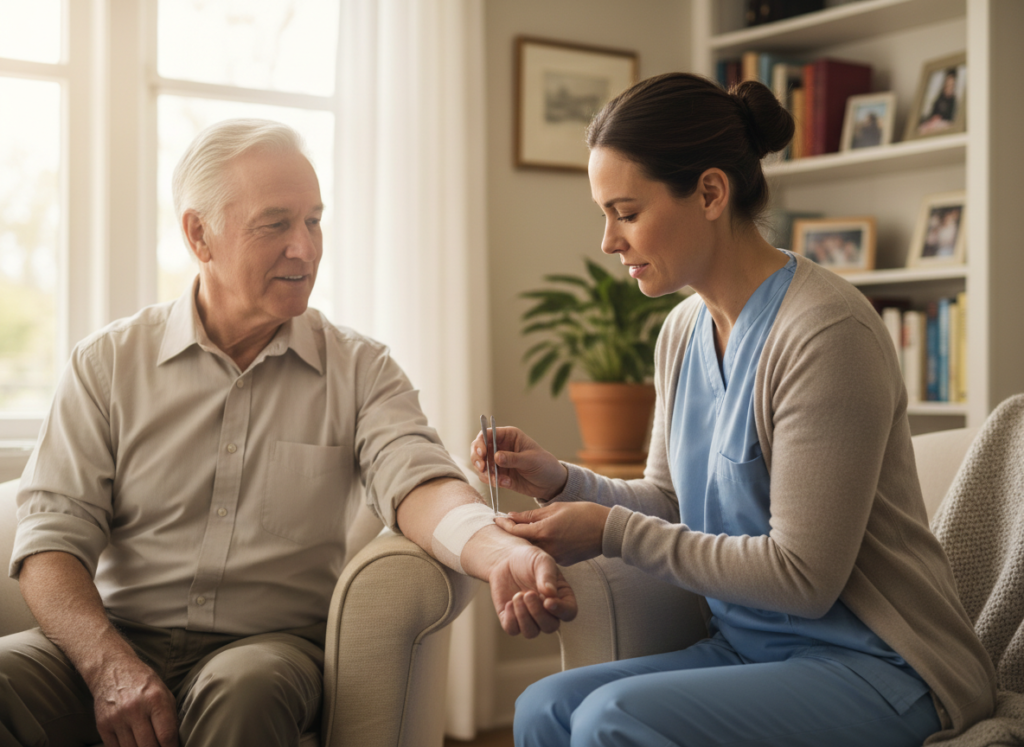
Some wounds are straightforward enough for families to manage with clear instructions. Others — particularly after major surgery, for diabetic patients, or for anyone with slower healing — benefit from a licensed nurse handling dressing changes and monitoring directly. This is exactly what professional wound care at home is designed for.
Frequently Asked Questions
How often should a wound dressing be changed?
This depends entirely on the type of wound and your discharge instructions — anywhere from daily to every few days. When in doubt, follow what your surgeon or nurse specifically recommended rather than a general rule.
Is some drainage normal after surgery?
Yes, a small amount of clear or slightly pink drainage in the first few days is often normal. Increasing amounts, thick pus, or a foul odor are not — those warrant a call to your provider.
Can a nurse take over wound care if a family member isn’t comfortable doing it?
Yes. Many families bring in a licensed nurse specifically for this reason — proper technique matters, and it’s completely reasonable not to feel confident managing it yourself.
Baylin Home Care provides licensed RN and LPN wound care throughout the Hamptons, Suffolk County, and Nassau County. Call (631) 283-3033 to discuss your family’s situation.